Why Do I Shop When I'm Bored? Boredom Shopping
"Why does boredom lead to shopping? Learn how boredom shopping triggers impulse buying and how to break the cycle."
Why Do I Shop When I'm Bored? Understanding Boredom Shopping
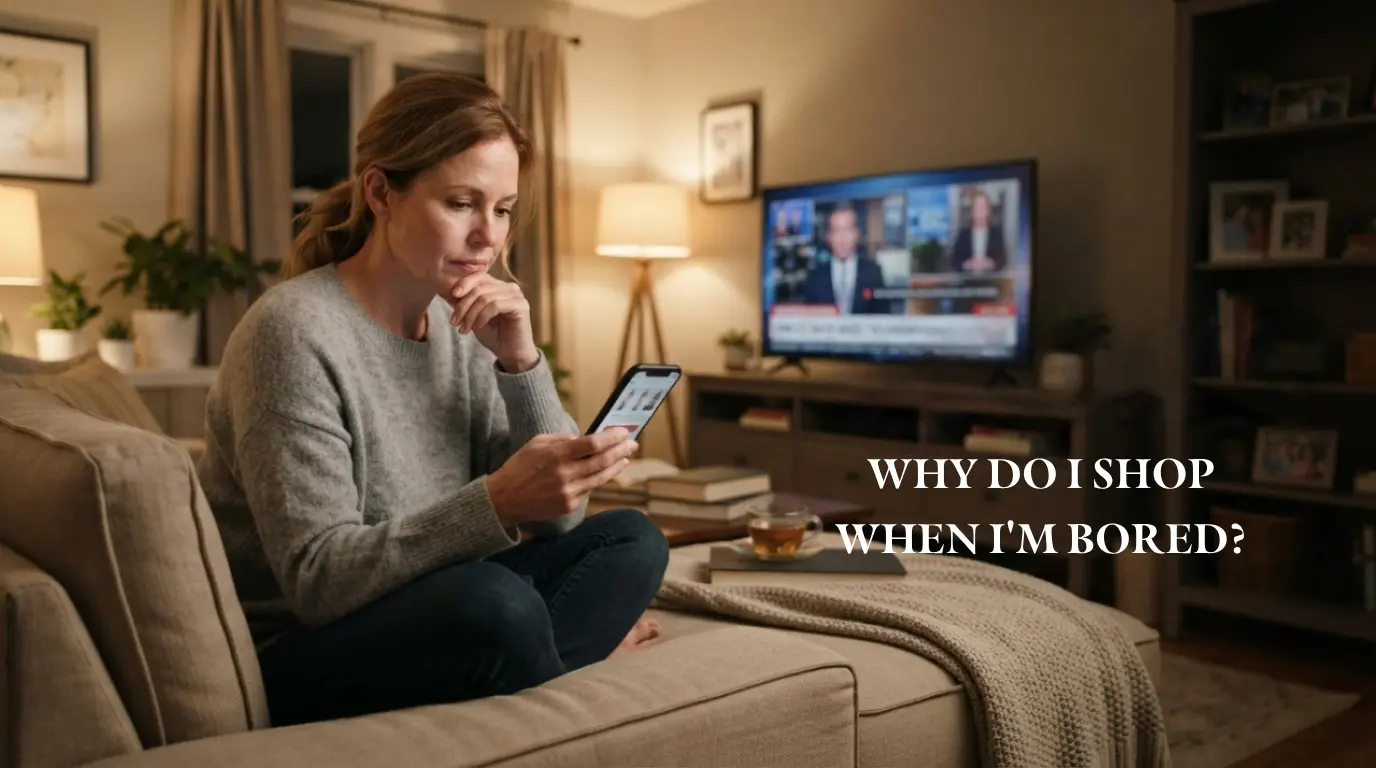
You're watching TV, but the show isn't really holding your attention. You pick up your phone and scroll for a while. Instagram gets boring. YouTube doesn't have anything interesting. Then you open a shopping app.
You're not looking for anything in particular. You don't need new clothes, a gadget, or anything for the house. You just start browsing.
A few minutes later, you've found something interesting. You check the price, look at the reviews, compare a couple of options, and suddenly you're thinking about buying it.
So, why do I shop when I'm bored?
Sometimes, you aren't really looking for something to buy. You're looking for something to do.
Shopping happens to be very good at filling an empty few minutes. It offers novelty, choices, things to compare, and an endless stream of products to discover. For some people, that can make shopping an easy response to boredom, even when there was no intention to spend money.
You Weren't Looking for Anything. You Were Looking for Stimulation.
Boredom can make an ordinary moment feel strangely uncomfortable. When nothing is happening, you may start looking for something that can hold your attention.
That might be a video, a conversation, a game, a walk, or a shopping app.
Shopping is particularly easy because you don't need a plan before you start. You can open an app without knowing what you want and immediately have hundreds of things to look at. One product leads to another, and before long, browsing has become the activity.
That's what makes shopping when bored different from ordinary shopping. You may not have started with a need or even a specific desire. You simply wanted something interesting to happen.
Sometimes You Want to Shop, Not the Product
Here's the part that's easy to miss: wanting to shop isn't always the same as wanting to own something.
Think about browsing for clothes when you're bored. You might enjoy looking at different styles, imagining what you would wear, checking prices, or reading reviews. The browsing itself gives you something to focus on.
You may genuinely like the product. But you may also be enjoying the experience of discovering it.
That's why someone can spend twenty minutes browsing a shopping app without being able to name anything they actually needed.
The product caught your attention, but the shopping experience may have been what you were looking for in the first place.
How “Just Browsing” Can Become an Impulse Purchase
Most impulse purchases don't necessarily begin with the decision to buy.
They can begin with a much more harmless thought:
“I'll just have a look.”
You're bored, so you open the app. You find something interesting and start comparing it with similar products. Then you notice that it's discounted. You imagine using it. You read a few reviews.
At this point, the purchase can start feeling reasonable.
After all, you've spent time thinking about it. It's not that expensive. You like it. And then comes the familiar question: “Why not?”
This is one way boredom browsing can turn into impulse buying. The product may not have been something you were thinking about before you opened the app, but the browsing session created an opportunity to want it.
For a closer look at why online shopping makes this process so easy, see Why Online Shopping Makes Impulse Buying So Easy.
Why Online Shopping Makes Boredom Shopping So Easy
Online shopping removes almost every barrier between boredom and browsing.
You don't need to leave the house. You don't need to decide which store to visit. You don't even need to know what you're looking for.
You can browse while watching TV, during a slow workday, while waiting for someone, or in bed before going to sleep. A few taps are enough to turn an empty moment into a shopping session.
And there is always something else to see.
That constant availability can make shopping an especially convenient form of entertainment. When the phone is already in your hand, opening a shopping app can feel easier than deciding what else to do.
The issue isn't that online shopping is inherently bad. It's that when shopping is always available, boredom can become a reason to open the door to purchases you weren't planning to make.
When Shopping Becomes a Boredom Habit
For some people, repeatedly shopping in response to boredom can become a familiar pattern.
You're bored, so you browse. Browsing gives you something to focus on. Occasionally, browsing leads to buying. The next time you're bored, shopping may feel like an obvious thing to do again.
Eventually, you might find yourself opening a shopping app almost automatically during certain situations: when you're watching TV, lying in bed, taking a break, or having a slow day.
The important thing isn't whether you've ever made a purchase while bored. Most people occasionally buy things without planning to.
The more useful question is whether shopping has become your default answer to having nothing else to do.
If it has, the behavior may be less about what you're buying and more about the habit surrounding the shopping.
If boredom shopping starts happening so frequently that it feels difficult to stop, the behavior may be shifting into a deeper habit. For a closer look at that transition, read Shopping Addiction: Why You Can't Stop Buying and How to Break the Cycle.
Boredom Isn't the Same as Stress or Sadness
Shopping can be triggered by many different emotions, and boredom is only one of them.
Someone might shop after a stressful day because they want a distraction. Someone else might buy something when they're feeling down because the purchase gives them a temporary sense of comfort or excitement.
Boredom is different.
The feeling may simply be: “Nothing is happening, and I want something to happen.”
That distinction matters because the underlying need can be different. If you're stressed, dealing with the source of that stress may help. If you're bored, finding something genuinely engaging to do may be enough to interrupt the urge to browse.
The behavior can look similar from the outside, but understanding the trigger can change how you respond to it.
Signs That Boredom Might Be Driving Your Shopping
Boredom may be playing a role in your shopping if you recognize patterns such as:
- You open shopping apps without looking for anything specific.
- You browse whenever you have a few minutes to fill.
- You regularly shop while watching TV.
- You check shopping apps during slow periods at work.
- You browse products before going to sleep.
- You enjoy discovering products even when you don't need anything.
- You frequently add things to your cart without having planned to buy them.
- You sometimes wonder why you bought something once the excitement has passed.
- You tend to shop at the same times or in the same situations.
None of these signs means that something is necessarily wrong. The point is simply to notice whether boredom and shopping have started becoming connected in your routine.
Are You Bored or Do You Actually Want It?
Before buying something you discovered while browsing, give yourself a moment and ask a few simple questions.
Did I want this before I opened the app?
If you weren't thinking about the product beforehand, ask yourself what changed after you started browsing.
What was I doing before I started shopping?
Were you bored on the sofa? Taking a break? Avoiding a task? Lying in bed?
Knowing what happened immediately before the shopping session can reveal the trigger.
Would I still want this tomorrow?
You don't have to decide immediately. Save it and come back later.
If you still want it when you're no longer bored, you can make the decision with a clearer head.
Am I excited about owning it or finding it?
Sometimes the excitement comes from discovering something new. If the product itself isn't particularly useful or meaningful to you, that distinction is worth noticing.
What will I actually use it for?
Try to picture the product after the excitement of the purchase has disappeared. Where will you use it? How often? What does it replace or solve?
If I close the app, will I still think about it?
If you completely forget about the product shortly after closing the app, that may tell you something about how strong the original desire really was.
These questions aren't designed to talk you out of buying things.
They're designed to help you figure out whether you're buying because you want the product or because you wanted something to do.
What If You Simply Didn't Open the App?
There's another question worth asking:
What would have happened if you hadn't opened the shopping app?
Imagine you're bored while watching TV. Instead of opening a shopping app, you make a drink, take a short walk, read something, call a friend, or find something else that genuinely interests you.
You might never think about the product you could have discovered.
That's important because sometimes the purchase only becomes possible after the browsing begins.
If you interrupt the process at the beginning, there may be nothing to resist at the end.
This is one reason a pause can be more useful than trying to rely on willpower after an item is already sitting in your cart.
How to Break the Boredom → Browsing → Buying Cycle
You don't have to stop shopping altogether. The goal is to make the connection between boredom and buying less automatic.
Notice the moment
When you reach for a shopping app because you're bored, simply recognize what's happening.
“I'm bored, and I'm about to start shopping.”
You don't have to judge yourself or immediately put the phone away. Just noticing the trigger creates a little space between the feeling and the action.
Give yourself another option
Have a few easy alternatives for those empty moments. Read a few pages, listen to music, take a walk, message someone, work on a hobby, or do something completely unproductive that you genuinely enjoy.
The alternative doesn't need to be impressive. It just needs to give your attention somewhere else to go.
Save the product instead of buying it
If you genuinely like something, save it.
Come back later when you're not bored.
You may still want it, in which case you can make the purchase intentionally. Or you may discover that the desire disappeared with the boredom.
Add a little friction
Turn off unnecessary shopping notifications. Move shopping apps away from your home screen. Avoid opening them automatically whenever you have a few minutes to fill.
Small changes can make an automatic behavior less automatic.
Look at what the habit costs
One small purchase may not feel significant. But repeated boredom purchases can add up.
If you're curious about how much your impulse purchases could be costing you over time, try the WaitAndBuy Impulse Purchase Calculator.
Seeing the bigger number can make a recurring pattern easier to recognize.
You Don't Have to Stop Shopping
It's easy to turn a conversation about impulse buying into a list of things you're not supposed to do.
Don't browse. Don't shop when you're bored. Don't buy anything you didn't plan for.
But that's not the point.
Shopping can be enjoyable. You can discover something while casually browsing and decide that you genuinely want it. An unplanned purchase isn't automatically a bad purchase.
The useful goal is simply to recognize when shopping has become your way of filling empty time.
Once you notice that, you have another choice.
You can still buy the product.
Or you can close the app.
Either way, you're making the decision consciously rather than letting boredom make it for you.
FAQ
Why do I shop when I'm bored?
Boredom can create a desire for stimulation and something interesting to do. Shopping apps provide novelty, discovery, and endless things to browse, making them an easy way to fill empty time.
What is boredom shopping?
Boredom shopping is browsing or buying products primarily because you have nothing else to do, rather than because you have a specific need or planned purchase.
Why do I want to shop but not actually want anything?
You may be looking for the experience of shopping rather than a particular product. Browsing, discovering, comparing, and imagining purchases can provide stimulation even when you don't need anything.
Can boredom lead to impulse buying?
It can. For some people, boredom leads to browsing, and browsing exposes them to products they weren't previously considering. That can make an unplanned purchase more likely.
How do I stop shopping when I'm bored?
Start by noticing when boredom makes you reach for a shopping app. Then pause, save products for later, and try another activity before deciding whether you actually want to buy.
Is shopping when bored always a problem?
No. Occasionally shopping while bored isn't automatically a problem. It becomes more worth examining when shopping regularly becomes your way of filling empty time or repeatedly leads to purchases you don't really want.
How can I tell if I actually want something?
Ask yourself whether you wanted it before browsing, whether you would still want it tomorrow, what you will use it for, and whether you're more excited about owning it or simply finding it.
Conclusion
The next time you find yourself opening a shopping app with nothing in mind, try asking a slightly different question.
Not just:
“Do I need this?”
But:
“Why did I open this?”
Maybe you really do want something.
Or maybe you're sitting on the sofa, your show isn't holding your attention, and you just want something to happen.
That's not a reason to feel guilty. It's simply something worth noticing.
Because sometimes you don't actually want to buy something.
You just want something to do.
And recognizing the difference is where the pause begins.