You Don't Need It, You're Just Scared Of Missing Out
"Ever bought something because it was almost sold out or on a limited-time sale? Learn how FOMO and fake urgency can trigger impulse buying."
Have you ever bought something you didn't really need, not because you loved it, but purely out of panic that you'd miss out?
Maybe it was a limited-edition decor piece, a jacket with only two sizes left, or a gadget flagged "selling fast." In that exact second, your brain stops evaluating whether the item actually adds value to your life. Instead, a familiar narrative kicks in: if you don't buy it right now, it's gone forever.
It's one of retail's oldest tricks, and it can derail weeks of financial progress in seconds.
The Real Cost of Getting Played
Peel back the layers of a panic buy and two uncomfortable truths show up.
First, you almost never actually need the thing. Nobody's survival hinges on a trendy candle holder or a limited color of a phone case. Not even close.
Second, and this one stings more: every object you bring home isn't just a win, it's a new task. It's something you now have to store, dust, organize, and eventually deal with getting rid of. When you buy on impulse, you're not just spending money. You're paying to create more work for yourself.
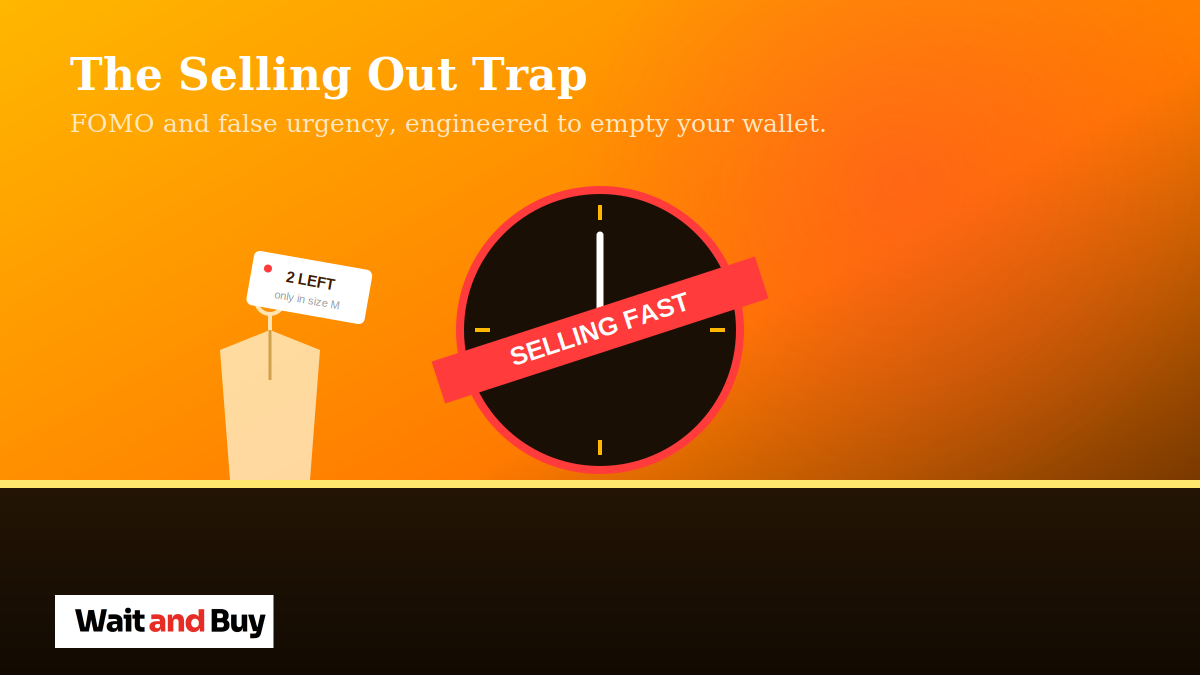
Marketing teams understand this completely. They lean on artificial scarcity and FOMO to make a calm, intentional shopper feel like they're standing on a burning bridge. The goal is simple: get you to react before your logical brain has a chance to ask whether you even have a place for the thing.
Beating the Game of Manufactured Urgency
When you fall for this kind of pressure, the sting isn't just financial. It's the feeling of having been played.
The fix isn't beating yourself up over it. It's learning to recognize the pattern while it's happening. The next time that hot spike of panic tells you an item is about to disappear forever, pause and ask yourself one question: do you actually want this, or are you just afraid of missing a deadline someone else invented?
Putting a Speed Bump on Panic Buying
Recognizing the FOMO trap is half the fight. But in the middle of a flash sale or a crowded store, artificial urgency is hard to shake with willpower alone. You need something physical to interrupt it.
To prepare for these pressure tactics before they hit, you can also run through a structured Black Friday Buying Checklist: 7 Questions Before You Buy to ground your decisions.
That's exactly the gap WaitAndBuy is built for. The next time "it's about to sell out" panic hits, snap a photo of the item instead of buying it, walk away, and give yourself twenty-four hours of breathing room.
Nine times out of ten, once you're away from the sales floor and the pressure drops, you'll realize you never wanted the item at all. You just didn't want to lose a game the store rigged from the start.
For a closer look at how social media creators amplify the pressure of missing out, read Why Influencer Hauls Make You Feel Like You're Missing Out.
Quick Takeaway
How do you resist FOMO-driven impulse buying? Recognize that scarcity messaging like "selling fast" or "limited stock" is designed to trigger panic before you can think clearly. When you feel that urgency, pause instead of reacting. Take a photo of the item and step away for 24 hours. If the desire is still there once the artificial pressure fades, it was a real want. If it isn't, you just avoided paying to create more clutter.