Why Do I Feel Like I Need to Buy Something? 6 Common Reasons
"Why do you feel like buying something when you don't need anything? Learn how boredom, stress, novelty, habits, rewards and FOMO create buying urges."
Why Do I Feel Like I Need to Buy Something? 6 Common Reasons
Sometimes you open a shopping app without knowing what you want.
You start scrolling through products, checking sale sections, looking at recommendations, or searching for something new. Nothing was missing from your life a few minutes ago, yet you suddenly have the feeling that you need to buy something.
The strange part is that there may not even be a specific item behind the urge.
You are not thinking, “I need new shoes.” You simply feel like you want to shop.
That feeling can come from several different places: boredom, stress, the desire for something new, habit, reward-seeking, FOMO, or simply wanting a small change in how you feel right now.
Understanding this distinction matters because the urge to buy is not always about the product. Sometimes, the product is simply the easiest way your brain has learned to create a little excitement, relief, novelty, or change.
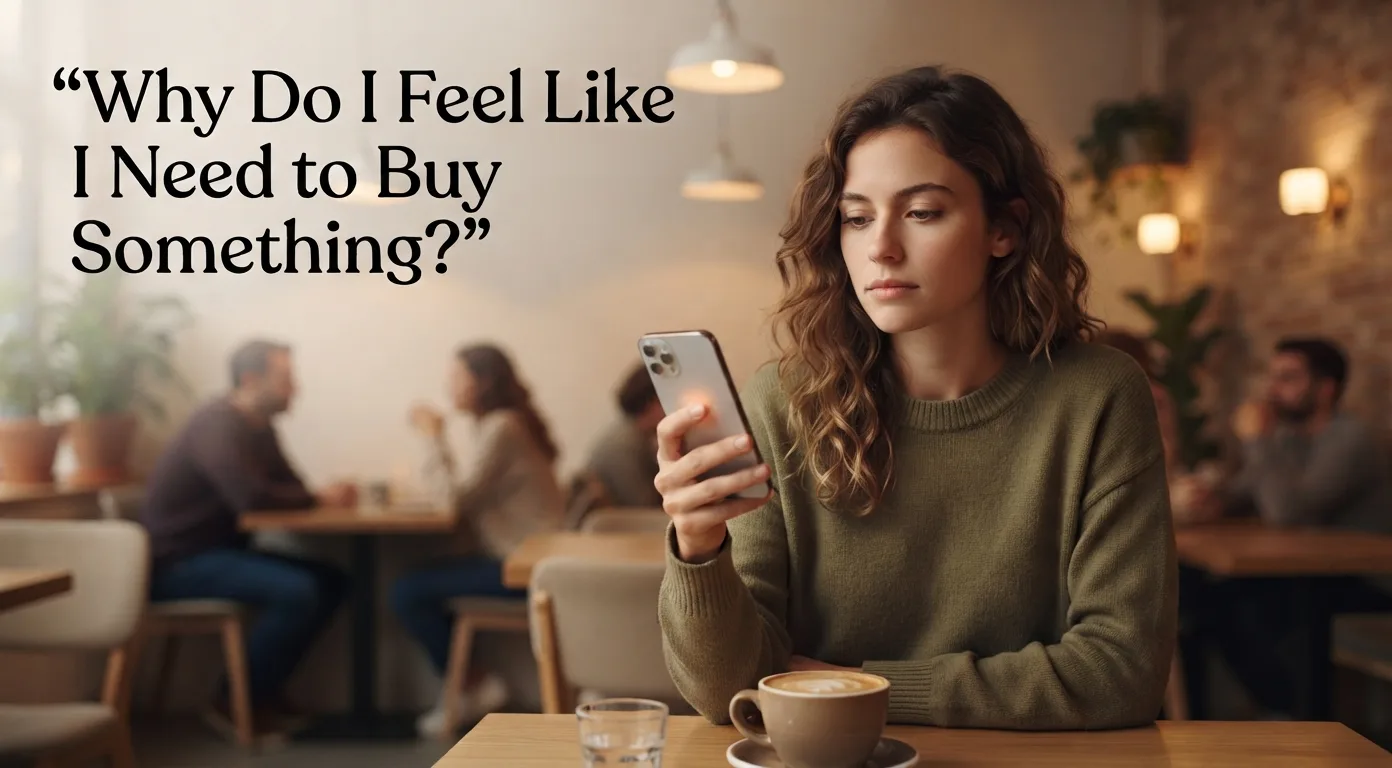
Why Do I Feel Like I Need to Buy Something?
People can feel like they need to buy something even when they don't need a particular item because the urge to shop may be connected to boredom, stress, novelty, habit, reward-seeking, or FOMO rather than the product itself. In other words, you may be looking for a feeling or change in your current state, and shopping happens to be an easy way to get it.
There is an important difference between needing an item and feeling the need to shop.
If your phone charger stops working, you may genuinely need a replacement. There is a clear problem and a clear solution.
But the feeling of “I want to buy something” can happen without any practical problem to solve. You may already have everything you need and still feel drawn toward shopping.
In that situation, the urge itself becomes the thing worth understanding.
Instead of asking only, “What should I buy?” it can help to ask, “What am I hoping buying something will change about how I feel?”
That question shifts attention away from the product and toward the underlying urge.
1. Boredom Can Make You Want to Shop
When nothing particularly interesting is happening, shopping can provide something to do.
Browsing products gives your attention somewhere to go. There are new images, prices, reviews, comparisons, recommendations, and possibilities. Even when you don't intend to purchase anything, the process itself can feel engaging.
This is why you may find yourself shopping simply because you're bored. The product may not be particularly important; the activity is providing stimulation.
Online shopping makes this especially easy because there is almost always something new to discover. A few minutes of boredom can quickly turn into browsing dozens of products.
If you often think, “I want to buy something” when what you really mean is “I don't know what to do right now,” boredom may be part of the trigger.
2. Stress, Anxiety, or Sadness Can Create a Buying Urge
Shopping can also become associated with emotional relief.
After a difficult day, buying something may feel like a small reward or a way to distract yourself. If you're anxious, sad, frustrated, or simply emotionally drained, browsing products can give you something else to focus on for a while.
The purchase doesn't necessarily solve whatever caused the emotion. But shopping can create a temporary sense of anticipation, distraction, or change.
This is sometimes described as emotional shopping: using shopping or buying as a way of responding to an emotional state rather than primarily because you need the item.
For example, someone might have a stressful day at work and decide they “deserve” something. Another person might shop when they're feeling lonely because browsing and buying provides something to look forward to.
If the urge regularly appears after difficult emotional moments, the product may not be the real starting point. The feeling came first.
3. You May Be Looking for Novelty
People tend to be drawn to things that are new, different, or unfamiliar.
A new product can represent possibility: a different outfit, a new gadget, a better-looking room, a new hobby, or simply something you haven't seen before.
This can make shopping particularly attractive when everyday life feels repetitive.
You may not actually want the object as much as you want the feeling of discovering something new.
That is one reason the excitement surrounding a purchase can sometimes fade after you own it. Part of what attracted you may have been the novelty itself.
4. Shopping Can Become a Habit
Sometimes the urge doesn't require a strong emotional trigger at all. It can simply become a routine.
You finish work and open a shopping app. You have a few minutes before bed and start browsing. You get into bed, pick up your phone, and check what's new. Over time, these situations can become associated with shopping.
The sequence can become almost automatic: a particular situation leads to browsing, browsing leads to discovering products, and product discovery creates an opportunity to buy.
Late-night shopping is a good example. You may not have planned to shop before getting into bed, but scrolling through your phone becomes part of your nighttime routine, and shopping apps are only a few taps away.
At that point, “I feel like buying something” may be less about a deliberate decision and more about a familiar behavior being activated.
5. Buying Something Can Feel Like a Reward
Shopping can also become connected with the feeling of treating yourself.
You finish a difficult task and want to reward yourself. You receive your salary and feel like you should buy something. You accomplish a goal and decide that you deserve a purchase.
Payday can be a particularly strong trigger because receiving money can create a sense that spending is now available or justified. If shopping has become part of how you celebrate getting paid, the urge can appear even when you don't have anything specific planned.
There is nothing inherently wrong with enjoying a purchase as a reward. The useful question is whether buying has become your automatic response whenever you want to celebrate, recover from a difficult day, or feel good about yourself.
6. FOMO Can Make Something Feel More Urgent
Sometimes the urge comes from the fear that an opportunity will disappear.
A limited-time discount, low-stock message, trending product, new release, or recommendation from someone else can make something feel more important than it did before.
You may not have wanted the item yesterday. But once you see that other people are buying it, a sale is ending, or the product appears to be becoming popular, suddenly it can feel like something you should consider buying.
FOMO changes the question from “Do I actually want this?” to “What if I miss my chance?”
That can create a strong buying urge even when there was no original need.
Social Media, Ads, and Notifications Can Trigger the Urge
Shopping urges don't always start inside your head. Sometimes something outside you starts the process.
You might see someone showing a new product on social media, receive a notification about a sale, get an email about an item you viewed earlier, or see a targeted advertisement for something that happens to match your interests.
These interruptions can introduce products into your attention when you weren't thinking about shopping at all.
A product you had never considered can suddenly become something you want to investigate.
The more you browse, the more recommendations you may encounter, creating a continuous stream of things you could potentially buy.
This doesn't mean every advertisement causes an impulse purchase. It simply means the shopping environment can create opportunities for buying urges that would not otherwise have appeared at that moment.
Sometimes You Want a Change, Not a Purchase
One of the most useful ways to understand a shopping urge is to separate the object from the feeling behind it.
Imagine coming home after a repetitive week and suddenly wanting to buy new clothes.
Maybe the clothes aren't the real issue. Perhaps you want to feel different.
Or you've been working from home for weeks and suddenly want something to make your environment feel new. The product may simply represent a change from the routine.
The same thing can happen when you're stressed or restless. You might browse expensive gadgets because you want excitement or distraction, not because you genuinely need another gadget.
When this happens, the question isn't necessarily “What should I buy?”
It may be “What change am I looking for?”
Why You Can Want to Shop Without Wanting Anything Specific
This is one of the most confusing parts of the experience.
If you don't know what you want, why do you still feel like you need to buy something?
Because the shopping urge can exist independently of the product.
You can have the feeling, “I want to browse, discover, choose, or buy something,” without having a particular item in mind.
That is why you can sometimes open a shopping app and feel as though you're searching for something you cannot quite identify.
You are looking for a product that might satisfy an urge that existed before the product was found.
Once you recognize this, the experience becomes easier to understand. You don't necessarily have a missing item. You may simply have an active desire for stimulation, novelty, reward, relief, or change.
The Product Can Become the Explanation for the Feeling
Once you start browsing, the vague feeling can quickly acquire a specific target.
Instead of thinking, “I'm bored,” you might start thinking, “Maybe I should buy something for my room.”
Instead of “I want something different,” you might think, “I need a new outfit.”
Instead of “I've had a stressful day,” you might think, “I deserve these headphones.”
The product gives the feeling somewhere to go.
This doesn't mean the product is necessarily a bad purchase. Sometimes you really do want it.
The useful distinction is whether you wanted the product first or whether the product appeared after you were already looking for a way to change how you felt.
Why the Urge Can Feel So Immediate
Shopping is particularly good at providing an immediate response.
You can search for something, find it, compare it, put it in a cart, and potentially buy it within minutes.
There is very little waiting between wanting a change and taking action.
That immediacy can make shopping especially attractive when you are bored, restless, stressed, or looking for stimulation.
The longer-term consequences of spending are usually less emotionally vivid in that moment. Right now, there is a new product to explore, a discount to consider, or something exciting appearing on your screen.
The future cost can feel much less immediate than the present experience.
What Can I Do When I Feel Like I Need to Buy Something?
You don't necessarily need to make a decision immediately.
If there is no specific item you need, give the feeling some space before turning it into a shopping session.
Start by identifying what happened immediately before the urge. Were you bored, stressed, scrolling social media, celebrating something, feeling lonely, or simply looking for something to do?
Then ask yourself what you actually want to change. Do you want excitement, relief, novelty, entertainment, or a reward?
If you find a specific product you genuinely want, you can create a waiting period rather than deciding immediately. Save the item, add it to a list, or leave it in your cart and revisit it after 24 hours. For more expensive or less necessary purchases, a 48- or 72-hour cooldown can give you even more distance from the initial excitement.
You can also make the pause more useful by doing something that addresses the original trigger. If you're bored, change activities. If you're stressed, step away from the screen. If you're restless, move around or change your environment. If you're looking for novelty, find a new activity rather than automatically finding a new product.
The point isn't to tell yourself that you can never buy anything. It's to separate the moment you feel the urge from the moment you make the decision.
That's the basic idea behind WaitAndBuy: see something, pause, think, and then decide. A short waiting period can turn an automatic reaction into a more intentional choice.
Is It Normal to Want to Shop All the Time?
Occasionally wanting to browse or buy something is common. Shopping can be enjoyable, and people naturally respond to novelty, rewards, and attractive opportunities.
But if you find yourself thinking about shopping repeatedly throughout the day, constantly looking for something to buy, or using shopping as your main response to boredom or difficult emotions, it may be useful to look at the pattern more closely.
The question isn't simply how often you shop. It's what role shopping is playing in your day.
If the urge feels difficult to control or is creating financial or emotional distress, talking with a qualified professional may be helpful. You don't need to wait until the situation becomes severe to ask for support.
FAQ
Why do I feel like buying something when I don't need anything?
The urge to buy can appear even without a specific need because shopping may be connected to boredom, stress, novelty, habit, reward, or FOMO. In these situations, the desired change in how you feel may come before the desire for a particular product.
Why do I want to buy things when I'm bored?
Shopping gives boredom something to replace it with. Browsing products creates activity, choices, novelty, and anticipation, which can make an otherwise uneventful moment feel more interesting.
Why do I shop when I'm anxious or sad?
Shopping can become a form of distraction or emotional comfort. Finding and anticipating a purchase can temporarily shift your attention away from an uncomfortable feeling, even though the purchase doesn't address the original emotion.
Why do I get a rush when I shop?
The process of discovering something new, imagining owning it, comparing options, and anticipating the purchase can create excitement. Sometimes the anticipation is part of what makes shopping feel rewarding.
Why do I feel the urge to buy things I don't need?
The urge may be driven by something other than practical need, such as novelty, boredom, reward-seeking, habit, FOMO, or a desire to change how you feel in the moment.
Why do I want to shop when I have nothing specific in mind?
The desire to shop can come before the desire for a product. You may be looking for stimulation, entertainment, novelty, or a small reward, and browsing gives that feeling a specific target.
How do I stop feeling like I need to buy something?
Start by identifying what triggered the urge and what you are hoping the purchase will change. If you find a product you want, save it and use a 24- to 72-hour waiting period before deciding. The pause gives the initial urge time to settle and lets you evaluate whether you still want the item.
Is it normal to want to shop all the time?
Occasional shopping urges are normal, but constantly thinking about shopping or feeling unable to resist buying can be worth examining. If shopping is causing financial or emotional distress, consider talking with a qualified professional.
When is the urge to shop a problem?
The urge deserves more attention when it feels difficult to control, repeatedly leads to purchases you regret, interferes with your finances or relationships, or becomes your main way of dealing with difficult emotions.
Conclusion
The feeling that you “need to buy something” isn't always about needing something.
Sometimes boredom is looking for stimulation. Sometimes stress or sadness is looking for relief. Sometimes you want novelty, a reward, a change in routine, or reassurance that you aren't missing out.
And sometimes shopping has simply become a habit.
The product you eventually find may only be the target that gives the feeling somewhere to go.
So when the urge appears without a specific need behind it, try starting with a different question:
“What am I actually looking for right now?”
You might discover that the answer isn't something you can put in a shopping cart.
And if you do find something you genuinely want, you don't have to decide in the same moment you feel the urge. Give yourself a pause, come back to it later, and let the decision belong to you rather than the moment.