How Small Purchases End Up Costing So Much?
"Small purchases can feel harmless, but they can quickly add up. See how Amanda and Lucy discover the hidden cost of a night of food delivery."
No-Buy Night: How Small Food Delivery Orders Turn Into Big Spending
“Game night?”
“Absolutely. Your place or mine?”
Amanda and Lucy had been trying to get together for weeks. Tonight, they finally managed it. The plan was simple: play a few games, talk, laugh, and have something good to eat.
Neither of them planned to spend much money.
At least, that was the plan.
“Let’s Just Order Dinner”
Amanda: “I don't feel like cooking tonight.”
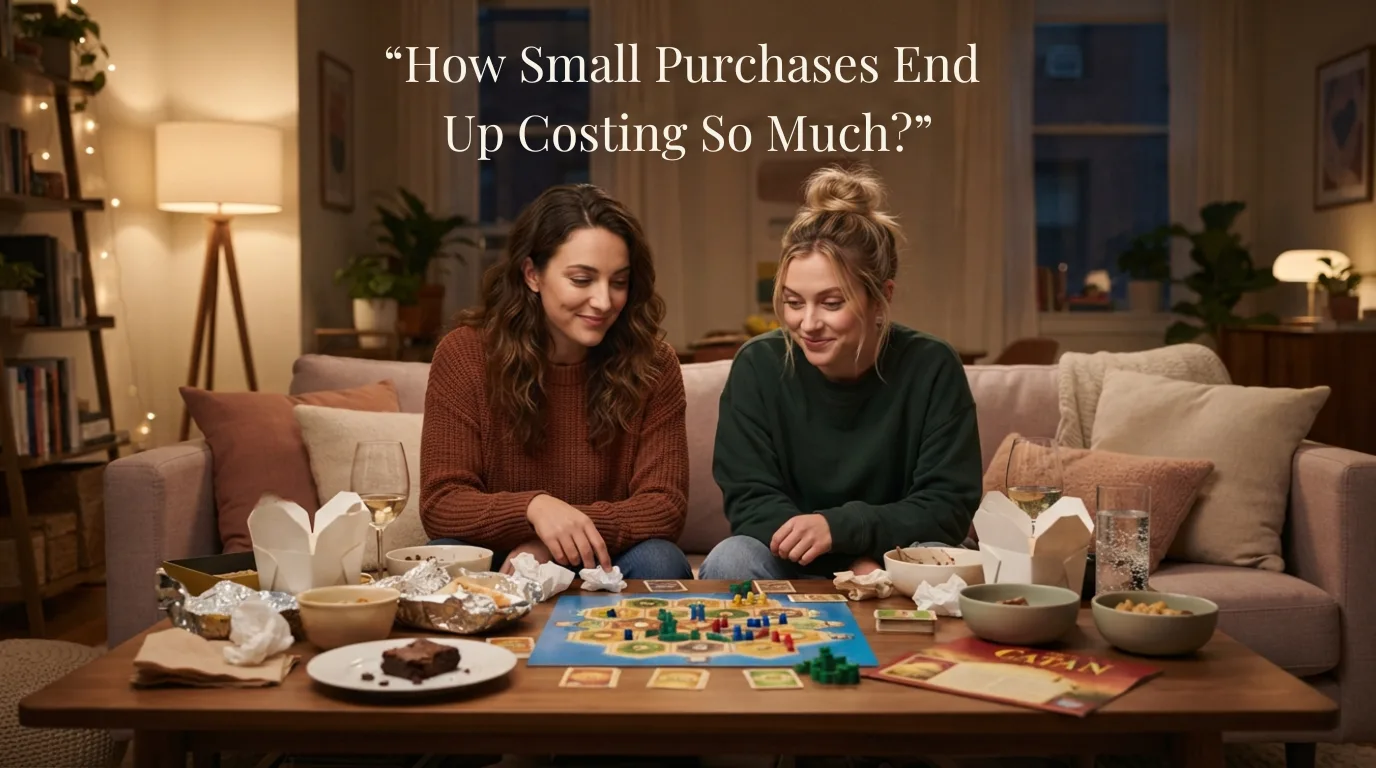
Lucy: “Same. Let's just order something.”
They opened a food delivery app and started scrolling.
Amanda: “This looks good.”
Lucy: “Get it. We're already ordering.”
They picked dinner and moved toward checkout. Nothing seemed excessive. It was just dinner.
Then Lucy noticed something else.
Lucy: “Should we get drinks too?”
Amanda: “Yeah, why not? We're having a game night.”
A couple of drinks went into the order.
Still, neither of them felt like they were making a big spending decision.
Then Come the Small Extras
The food was ordered, but the conversation continued.
Lucy: “Wait. Should we get something sweet?”
Amanda: “Dessert?”
Lucy: “Obviously.”
They added dessert.
A little later, while setting up the game:
Amanda: “I kind of want snacks too.”
Lucy: “There's a snack place nearby. Let's just get a small order.”
Another order was about to happen.
Each decision had an easy explanation. Dinner was dinner. Drinks were for the evening. Dessert was part of the fun. Snacks were just a little extra.
That is what can make small purchases so easy to overlook. When you evaluate each purchase separately, none of them seems important enough to stop and reconsider.
“Wait… How Much Are We Spending?”
Before placing the last order, Lucy looked at the screen.
Lucy: “Hold on.”
Amanda: “What?”
Lucy: “Add everything we've ordered tonight.”
Amanda opened the earlier order and looked at the numbers. Then the drinks. Then dessert. Then the snacks they were about to order.
Amanda: “Oh.”
Lucy: “Yeah.”
Amanda: “That's a lot more than I thought.”
Neither of them had made one huge purchase. They had made several small ones that gradually became one much larger evening of spending.
Why Do Small Purchases Add Up So Quickly?
One reason is that buying something online has very little friction. You see something you want, tap a few buttons, and it is ordered. There may be almost no time between the thought “that sounds good” and the purchase itself.
There is also a tendency to mentally separate purchases. Dinner feels like one expense, dessert feels like another, and a small snack order feels like something different again. Because each purchase sits in its own mental bucket, it can be harder to notice the combined cost.
The evening can also create a kind of decision momentum. Once Amanda and Lucy had already decided to order dinner, adding drinks didn't feel like starting a new spending decision. Then dessert felt like another small addition, and snacks felt like another. The purchases became part of the flow of the evening.
This is where consumer behavior gets interesting: the size of an individual purchase doesn't always determine how significant the spending feels. Context matters too.
And when spending is driven by convenience and repeated small decisions, buyer's remorse may only show up later, when you finally see the total.
“Do We Actually Need All This?”
Amanda looked at the screen again.
Amanda: “We already have dinner coming.”
Lucy: “And we have drinks at home.”
Amanda: “There's ice cream in the freezer too.”
They looked at each other.
Lucy: “So why are we ordering all this?”
There wasn't really a good answer.
They weren't hungry enough for another full order. They didn't need another dessert. They already had something to drink.
They just kept adding things because the evening had started to feel like an opportunity to order something.
So they paused.
A Simple No-Buy Night
Amanda: “Let's keep it simple.”
Lucy: “Meaning?”
Amanda: “Dinner only. No extra orders tonight.”
Lucy: “I'm in.”
They didn't cancel their dinner. They didn't decide they couldn't have fun. They simply stopped adding new purchases.
Dinner arrived. They opened their game, talked, laughed, and eventually had the ice cream they already had at home.
The evening continued exactly as planned.
This is the useful idea behind a No-Buy Night. It doesn't have to mean refusing every purchase or turning an enjoyable evening into a strict budgeting exercise. It can simply mean creating a boundary around unnecessary spending for a particular period.
For Amanda and Lucy, the boundary was simple: the evening didn't need another order just because another order was easy to make.
The Pause Made the Difference
Later that evening, Lucy brought it up again.
Lucy: “You know what's funny?”
Amanda: “What?”
Lucy: “If we hadn't looked at the total, I wouldn't have thought we were spending that much.”
Amanda: “Me neither.”
Lucy: “Every order felt small.”
Amanda: “But all the small orders together weren't small.”
That is where a pause can be useful. It creates a moment between wanting something and buying it. Instead of automatically following the next craving or convenience, you get a chance to look at the bigger picture.
That's also the simple habit behind WaitAndBuy: pause before you buy, give yourself some time, and then decide whether you still want it.
The goal isn't to make every purchase feel like a difficult decision. It's to make the decisions that are easy to overlook a little more visible.
You Don't Have to Stop Enjoying Food Delivery
A No-Buy Night doesn't have to mean never ordering food.
Amanda and Lucy still ordered dinner. They simply stopped the chain of “one more thing.”
That distinction matters. Intentional spending isn't necessarily about removing every enjoyable purchase from your life. It's about noticing when a purchase is happening because you genuinely want it and when it is happening simply because it is convenient, tempting, or already part of the moment.
Sometimes the right decision is still to order the dessert.
Sometimes you look at the total and decide the dessert isn't worth it.
The important part is giving yourself enough space to make that decision deliberately.
What Amanda and Lucy Learned
Amanda: “So, are we calling this a No-Buy Night?”
Lucy: “I think so.”
Amanda: “Even though we bought dinner?”
Lucy: “Yeah. We didn't buy anything extra.”
Amanda smiled.
Amanda: “That actually sounds pretty easy.”
And that was the point.
They weren't trying to become perfect at spending less. They had simply noticed a pattern before it continued.
A small pause had changed the direction of the evening.
FAQ
Why do small purchases add up so quickly?
Small purchases are easy to dismiss because each one feels manageable. When several happen during the same evening, however, the combined amount can become much more significant.
Why do I spend so much on food delivery?
Food delivery combines convenience with frequent opportunities to add extras. When ordering takes only a few taps, it can be easy to make several separate purchases without thinking about the total.
How can I stop impulse food delivery orders?
Try deciding what you actually want before opening the delivery app. If you find yourself adding extras or considering another order, pause for a few minutes and ask whether you still want it.
What is a No-Buy Night?
A No-Buy Night is a simple experiment where you avoid unnecessary purchases for an evening. It doesn't have to mean buying absolutely nothing; the idea is to avoid spontaneous or additional spending.
Does a No-Buy Night mean I can't order food?
No. You can still order something you genuinely want or need. The idea is to pause before additional purchases and decide whether they are actually worth making.
Can pausing before buying reduce buyer's remorse?
Pausing gives you more time to consider whether you actually want something. That can help you avoid purchases you later wish you had skipped, although it cannot guarantee that you will never experience buyer's remorse.
Conclusion
Amanda and Lucy didn't start their game night intending to overspend.
They simply kept making small decisions.
“Let's order dinner.”
“Let's get drinks.”
“Let's get dessert.”
“Let's get some snacks.”
Each one seemed harmless.
It was only when they stopped and looked at the bigger picture that they noticed how quickly those small decisions were adding up.
Sometimes spending less doesn't require a complicated budget or a complete lifestyle change. Sometimes it starts with noticing the next small purchase and giving yourself permission to wait.
Because the purchase you almost didn't notice can sometimes be the one that changes the total.