How Tracking My Mood Helped Me Stop Impulse Buying
"How tracking your mood can reveal what's really behind impulse buying and help you stop spending on things you don't need."
For years, she assumed her impulse spending came down to a simple lack of discipline. If something caught her eye online or in a store, she figured she just lacked the willpower to walk away.
She tried budgeting apps, strict spending bans, even hiding her credit cards. None of it stuck for long. The urge always crept back, and she'd find herself right back at checkout, wondering how she got there again.
Everything shifted once she stopped trying to control her wallet and started tracking her mind instead.
The Real Trigger
Rather than beating herself up every time an urge to buy showed up, she started keeping a simple log of how she felt the exact moment the itch hit. Within a couple of weeks, a clear pattern emerged.
She wasn't shopping because she needed things. She was shopping as an emotional Band-Aid. The pattern held up consistently:
- Exhaustion. After a grueling workday left her mentally fried, her impulse control disappeared almost entirely.
- Boredom. On slow afternoons or lazy weekends, browsing became a default activity chasing a quick hit of novelty.
- Stress. When anxiety spiked, buying something gave her a fleeting sense of control.
To examine how tension and pressure hijack your decision-making, read Stress Shopping: Why Stress Causes Impulse Buying and How to Stop.
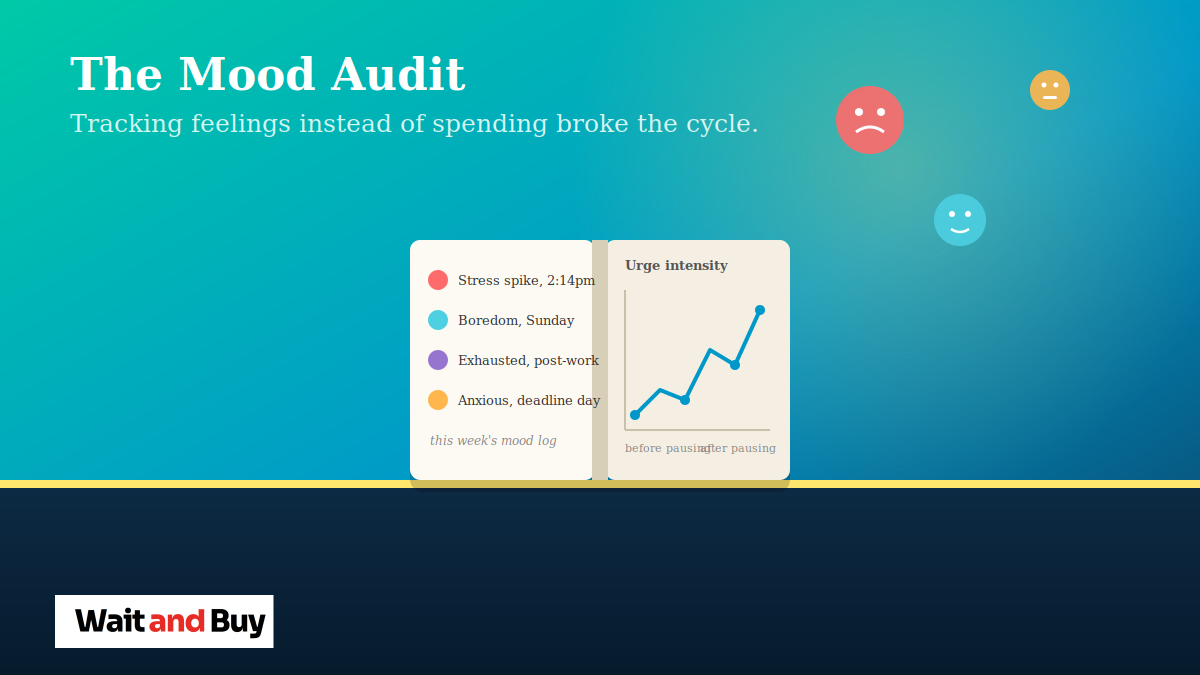
Once that breakdown was in front of her, in writing, her whole approach to the problem changed.
Flipping the Script from Resistance to Curiosity
Before tracking, resisting an impulse felt like white-knuckling a rope while something tried to pull her off a ledge. It was exhausting, and she usually lost.
Tracking changed the dynamic entirely, because it replaced resistance with curiosity.
Instead of panicking the moment she wanted to buy something, she started treating it like a quick internal check. When the urge showed up, she'd pause and ask herself a simple question: is this actual excitement about the item, or is it tiredness, boredom, or stress talking?
Just naming the underlying mood was often enough to strip the power out of the impulse. Realizing she was about to spend $50 on a gadget simply because she was bored on a Tuesday afternoon was usually all it took to break the spell.
Turning Awareness into an Action Plan
Tracking emotional triggers turned out to be a powerful tool against impulse shopping, but awareness alone isn't always enough, especially standing in front of an item in a crowded store.
That's the exact gap tools like WaitAndBuy are built to close.
Instead of fighting the urge in the moment or relying purely on memory afterward, the approach adds a physical pause button. When the emotional wave hits, snap a photo of the item, log the current mood, and walk away. Letting the emotion cool outside the store gives the logical brain time to catch up.
Once mood is separated from money, the urge to buy tends to fade on its own.
Quick Takeaway
How does tracking emotions reduce impulse buying? Logging your mood at the exact moment an urge to buy hits often reveals that spending is tied to feelings like exhaustion, boredom, or stress rather than genuine need. Naming the emotion in the moment weakens the impulse, and pairing that awareness with a physical pause, like photographing the item and walking away, helps the urge fade before a purchase happens.