Impulse Buying Survey 2026: Regret, Spending & Triggers
"Take the WaitAndBuy 2026 impulse buying survey exploring purchase frequency, spending, regret, triggers, and whether waiting could change buying decisions."
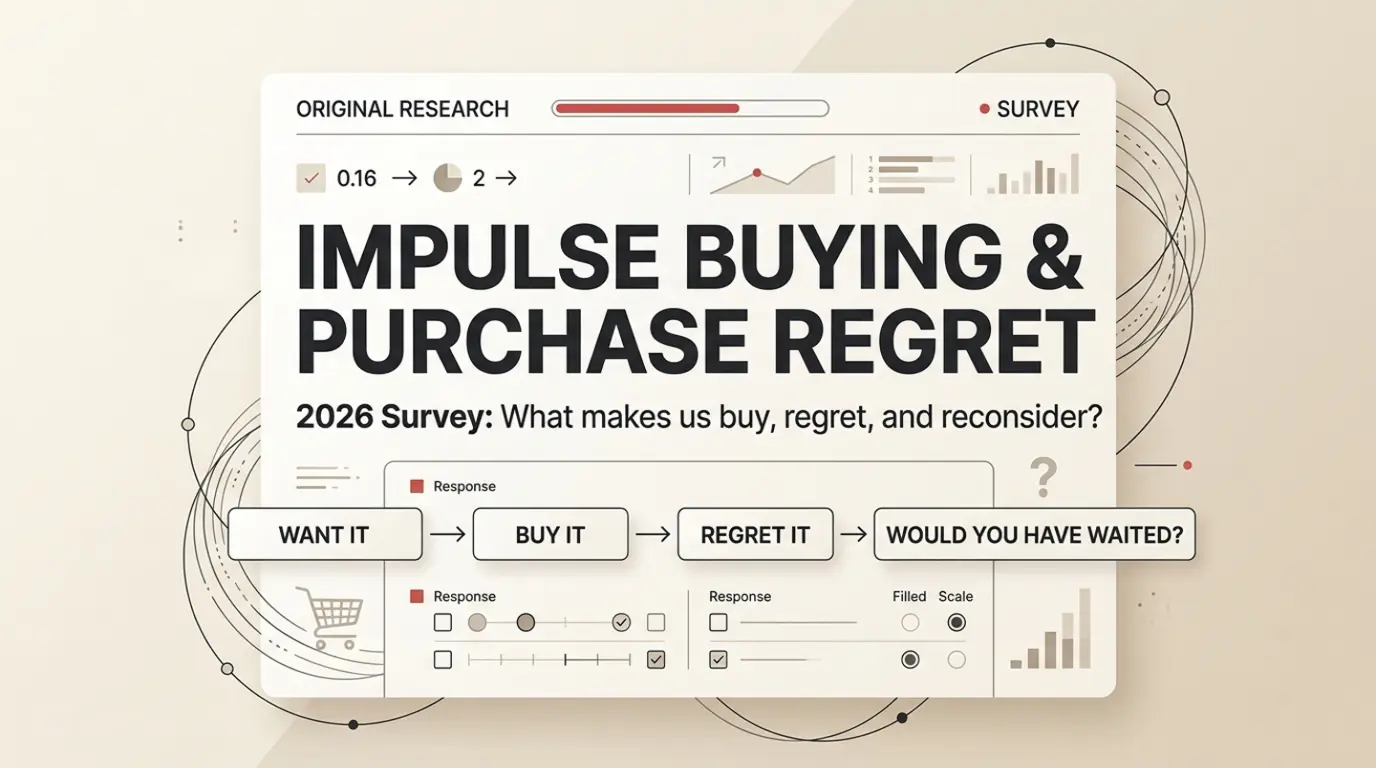
Impulse Buying & Purchase Regret: 2026 Survey
Have you ever bought something you did not plan to buy and later regretted it?
WaitAndBuy is conducting an original 2026 survey to better understand impulse buying and purchase regret. We want to find out how often people make impulse purchases, how much they spend, what influences those decisions, and whether taking a little more time to think could have changed the outcome.
This research will start with collecting responses and will be updated with the findings as enough data becomes available.
What We're Researching
The goal of this survey is to understand what impulse buying actually looks like in everyday life.
We're collecting responses about:
- How often people make impulse purchases
- How much they spent on a recently regretted impulse purchase
- Whether they regret those purchases
- What tends to trigger an unplanned purchase
- Where those purchases happen
- Whether waiting 24–72 hours might have changed the decision
We're not starting with a conclusion about why people impulse buy. The survey is designed to help us discover the patterns from the responses.
Why Impulse Buying and Regret Matter
An unplanned purchase is not necessarily a bad purchase. Sometimes you discover something unexpectedly and are genuinely happy that you bought it.
But some impulse purchases can leave people wondering whether they should have waited.
Understanding that difference is useful. Instead of simply asking people to "stop shopping," this research looks at what happens between the initial desire to buy and how people feel about the decision afterward.
The waiting question is especially important to us: Would having 24, 48, or 72 hours to think about the purchase have changed the decision?
Take the 2026 Impulse Buying Survey
Have you ever regretted an impulse purchase? Share your experience in our anonymous 3–4 minute survey.
Your response will contribute to the WaitAndBuy 2026 research.
What the Survey Asks
The survey takes approximately 3–4 minutes to complete and asks about your experiences with impulse purchases.
Questions cover areas such as purchase frequency, spending on a recently regretted impulse purchase, regret, buying triggers, purchasing environments, and whether waiting before buying could have made a difference.
There are no right or wrong answers. We're interested in what people actually experience.
What We'll Publish When Responses Are Collected
This page will be updated as responses are collected and analyzed.
Once we have enough data, we'll publish the findings, including the patterns we see around:
- Impulse purchase frequency
- Spending
- Purchase regret
- Buying triggers
- Where impulse purchases happen
- Whether people believe waiting would have changed their decision
The final research article will use the actual survey results rather than general assumptions or invented statistics.
For example, if the data shows that a particular percentage of respondents regretted an impulse purchase, we'll report that finding along with the relevant context.
The goal is to create useful original data that can help people better understand impulse buying and potentially provide a source that others can reference when discussing the topic.
FAQ
What is the WaitAndBuy 2026 survey about?
It is an original survey studying impulse buying, purchase regret, spending, buying triggers, and whether waiting before purchasing could change buying decisions.
How long does the survey take?
The survey takes approximately 3–4 minutes to complete.
Is the survey anonymous?
Yes. The survey is designed to collect anonymous responses.
When will the results be published?
The research page will be updated once enough responses have been collected and analyzed.
Why is WaitAndBuy conducting this survey?
WaitAndBuy is interested in understanding what happens when people pause or don't pause before making an unplanned purchase. The survey will help us explore those patterns using original data.