How Extreme Frugality Backfired and I Blew $4,000
"I lived extremely frugally for years, thinking I was being good with money. Then one day, I started overspending and blew $4,000."
For a long time, I took real pride in my financial discipline. I was the person who never splurged. While friends treated themselves to casual extras, I kept my wallet locked down tight. Every dollar spent on something non-essential felt, to me, like a small failure of character.
I genuinely believed I had ironclad self-control.
Then came a brutal stretch of work burnout, chronic stress, and plain exhaustion. My carefully guarded willpower didn't just bend. It shattered completely.
Over a few months, I went on a spending spree that shocked even me. High-end hobby gear I didn't have the skill to use. Top-tier electronics when a basic model would have done the job fine. Digital subscriptions I signed up for on impulse and barely opened again.
When I finally added it all up, the total came to roughly $4,000 spent on things I didn't need and barely used. Seeing that number made me feel physically sick. How does someone who prides themselves on being careful with money suddenly rack up thousands in purchases they can't even justify?
The Deprivation Backlash
What I eventually understood is that this wasn't a sudden collapse of discipline. It was something more predictable: a deprivation backlash.
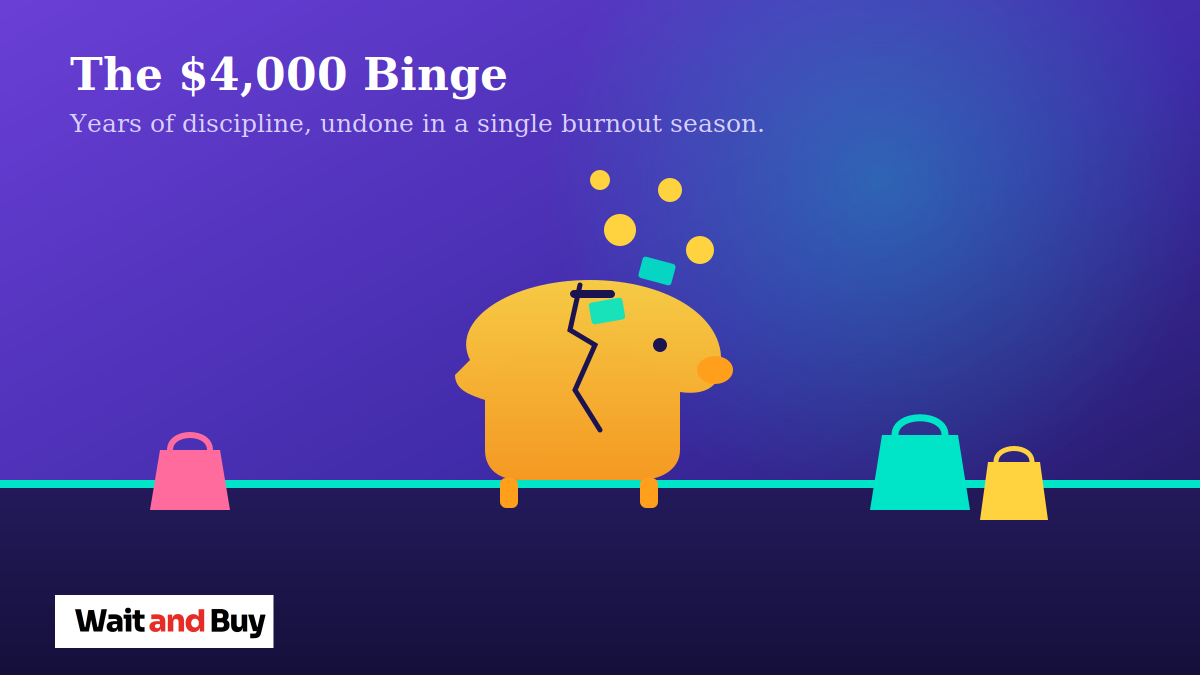
When you spend months, or years, denying yourself every small and harmless comfort in the name of being "good" with money, you build internal pressure. It feels like responsibility, but really you're starving your brain of the small everyday rewards it needs.
Eventually, when stress and fatigue pile high enough, that pressure finds a release. And it rarely shows up as a small treat. It shows up as an uncontrolled binge, trying to compensate all at once for everything you denied yourself.
Why Strict Budgets Break Under Pressure
Traditional financial advice tells us to tighten our belts and rely on willpower. But willpower is a finite resource, not an unlimited one. If your entire money strategy depends on never cracking under pressure, it's only a matter of time before one brutal week undoes months of saving.
The fix isn't more restriction or self-blame after the fact. It's learning to catch the emotional wave before it turns into an expensive one.
Breaking the Cycle Before It Starts
When the urge hits to abandon your budget completely, what you need is an interruption to the autopilot, not more discipline layered on top of exhaustion.
That's the exact gap WaitAndBuy is built to fill.
Instead of treating every desire as a crisis where you either give in completely or feel deprived, it creates a middle option. Snap a photo of the item, log the urge, and step away long enough for the emotional spike to pass. Giving yourself permission to wait, without guilt attached, is often what stops a binge before it starts.
Quick Takeaway
Why does extreme frugality lead to overspending? Denying yourself every small comfort builds internal pressure over time. When stress or exhaustion hits a breaking point, that pressure often releases as an uncontrolled spending binge rather than a small treat. Building in deliberate pauses, like photographing an item and waiting before buying, helps release that pressure gradually instead of letting it explode all at once.