7 Thanksgiving Grocery Shopping Do’s & Don’ts
"Learn how to stop impulse buying and overspending during Thanksgiving grocery shopping with 7 practical do’s and don’ts."
7 Thanksgiving Grocery Shopping Do’s & Don’ts to Stop Buying More Than You Need
Thanksgiving grocery shopping can start with a simple list: turkey, potatoes, vegetables, ingredients for dessert, and a few snacks. Then something happens.
You see a larger package that is “a better value.” You remember that you might need extra gravy. A seasonal dessert catches your attention. Then you start thinking, “What if someone wants this?” Before long, your carefully planned grocery trip has turned into a much bigger purchase than you intended.
The problem isn't necessarily that you are buying things you don't like or will never use. Many Thanksgiving purchases feel completely reasonable in the moment. The holiday creates plenty of opportunities to justify buying more than you originally planned.
That is where impulse buying can sneak into Thanksgiving grocery shopping. The goal isn't to avoid preparing properly or to count every item in your cart. It is to recognize when you are making a planned purchase and when you are creating a reason to buy something simply because it is available, discounted, seasonal, or feels useful.
That simple pause is at the heart of what WaitAndBuy is about: giving yourself a moment to think before turning a want into a purchase.
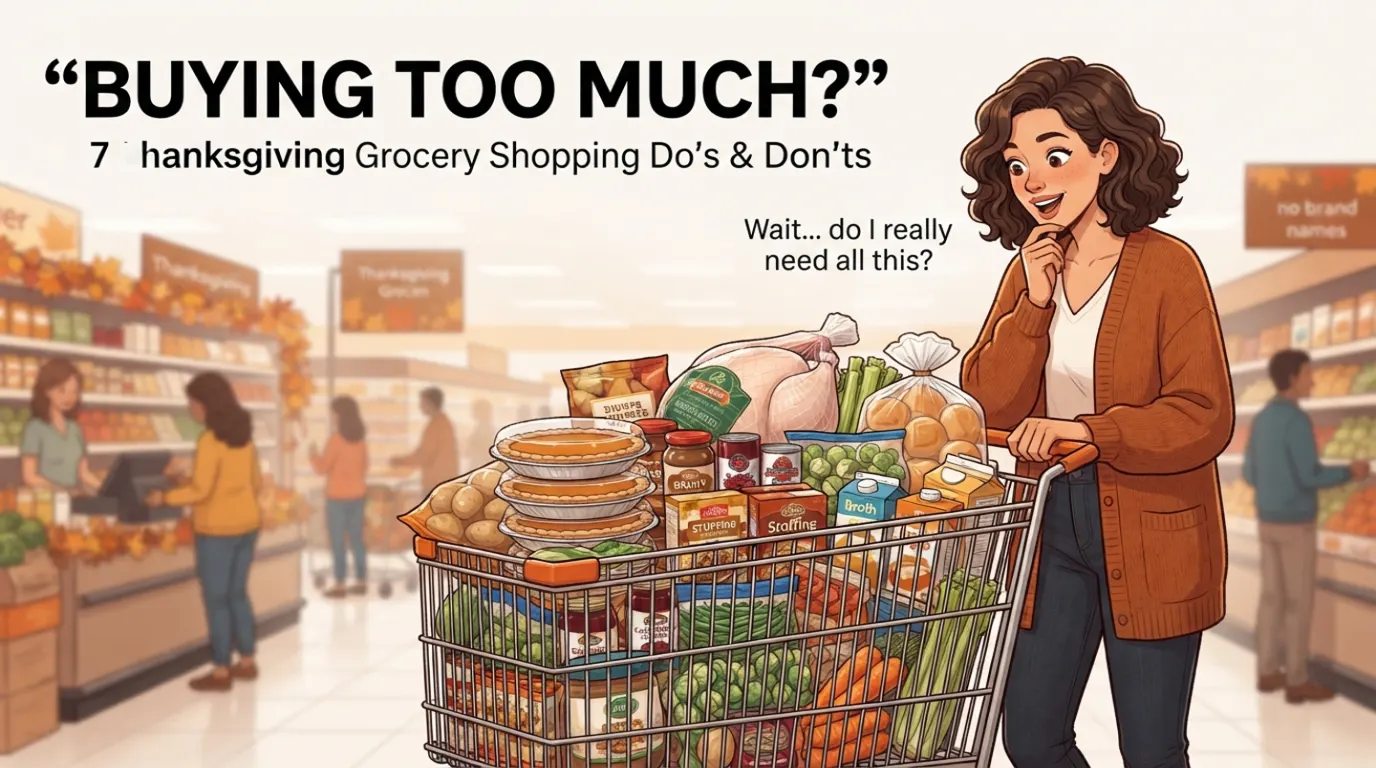
Here are seven Thanksgiving grocery shopping do’s and don’ts to help you pause before adding more to your cart.
1. Don't Buy “Just in Case”
“Just in case” is one of the easiest ways to turn a reasonable grocery trip into an expensive one.
You already have enough food for the people coming over, but then you start imagining everything that could go wrong. What if someone wants another side? What if the gravy isn't enough? What if somebody eats more than expected? Buying a little extra can feel like being prepared, but the phrase can quickly become an excuse to keep adding things.
Do: Know What You Actually NeedBefore shopping, think about how many people you are feeding and what you already have at home. If you genuinely need extra food, buy it. But if you are adding something only because you are imagining a problem that may never happen, pause before putting it in the cart.
A useful question is: “Do I have a specific reason to need this, or am I buying it just in case?”
That small pause can separate preparation from impulse spending.
2. Don't Let Bulk Deals Decide How Much You Buy
Thanksgiving is an easy time to fall for the bigger-package mentality.
You need one item, but the larger package appears to offer better value. Suddenly buying two or three seems smarter because the price per item is lower. The discount may be real, but that doesn't automatically mean the purchase is saving you money.
If you only needed one, spending more to get three isn't necessarily a saving. You have simply spent more upfront in exchange for having more products.
Do: Decide the Quantity Before Looking at the DealFigure out how much you need before allowing the promotion to influence your decision. Then ask yourself whether you would still buy the larger quantity if there were no discount.
If the answer is no, the deal may be driving the purchase rather than your actual needs.
3. Don't Try to Make Thanksgiving “Perfect” With More Purchases
Holiday shopping can create a subtle pressure to make everything feel special.
Maybe you already planned a dessert, but then you see another one that looks more impressive. You have enough appetizers, but a seasonal snack seems like it would make the table better. You already have drinks, but another option suddenly feels necessary.
None of these purchases are automatically bad. The problem starts when every small addition feels justified because it is Thanksgiving.
Do: Decide What “Enough” Looks LikeA memorable Thanksgiving doesn't require your shopping cart to keep growing. Decide in advance what you actually want to serve and what matters most to you.
If something wasn't part of the plan, give yourself a moment before buying it. Ask whether it genuinely improves the meal or whether you simply feel that you should have more because it is a holiday.
4. Don't Shop for an Imaginary Crowd
You planned your Thanksgiving meal for eight people. Somehow, you're standing in the grocery aisle wondering whether you should buy enough for twelve.
This isn't quite the same as buying extra portions “just in case.” Here, the uncertainty comes from the people themselves: the friend who might bring someone, the relative who could arrive unexpectedly, or the imagined guest who may never show up.
A reasonable buffer can make sense. But constantly increasing your quantities because you are worried about an unpredictable crowd can turn preparation into impulse spending.
Do: Plan for the People You Actually ExpectUse your guest list as your starting point. If you want a little extra for leftovers or unexpected needs, make that decision deliberately rather than adding items throughout the shopping trip.
You don't need to predict every possible Thanksgiving scenario. You just need a reasonable plan for the people you actually expect.
5. Don't Let a Sale Create a Need
A Thanksgiving promotion can make an ordinary product suddenly feel urgent.
You weren't planning to buy it, but now it is discounted. The thought changes from “I don't need this” to “I should get this while it's cheaper.”
That is one of the easiest ways a sale can trigger impulse spending. The discount becomes the reason for the purchase instead of the product solving a real need.
Do: Ask Whether You Wanted It Before the SaleBefore buying a discounted item, ask one simple question:
“Would I have put this in my cart if it wasn't on sale?”
If the answer is no, take a moment before buying. A lower price doesn't make an unnecessary purchase necessary.
If you want to see how small impulse purchases can add up over time, try the Impulse Purchase Cost Calculator.
6. Don't Keep Adding Things at the End of the Trip
The first part of a grocery trip is usually controlled. You have a list and a plan.
But by the time you reach the checkout, your attention has shifted. Snacks, seasonal products, drinks, desserts, and other items are suddenly easy to justify because they seem inexpensive compared with everything already in your cart.
One extra purchase doesn't feel like much. Then another one doesn't either.
Do: Treat Unplanned Items as a Separate DecisionIf something wasn't on your list, don't automatically put it in the cart. Stop and decide whether you genuinely want it.
You don't have to reject every spontaneous purchase. The important part is recognizing that it is a new decision rather than pretending it was always part of the plan.
That pause gives you a chance to choose instead of simply reacting.
7. Don't Confuse Holiday Excitement With a Reason to Spend
Thanksgiving shopping isn't just about groceries. It can also be emotional.
You may be excited about hosting family, creating traditions, cooking a special meal, or making the holiday feel different from an ordinary day. That excitement can make extra purchases feel more meaningful than they actually are.
A seasonal product can feel special simply because it is associated with the holiday. And when the excitement wears off, those purchases may not feel quite as important. That's when buyer's remorse can enter the picture.
Do: Spend on What Actually Matters to YouInstead of asking, “What else should I buy for Thanksgiving?” ask, “What do I actually want this Thanksgiving to be about?”
If a particular food, tradition, or purchase genuinely matters to you, make room for it. Intentional spending isn't about eliminating everything enjoyable. It is about choosing what is worth spending money on instead of letting every holiday-related temptation make the decision for you.
A Simple Thanksgiving Grocery Pause
You don't need a complicated system to control impulse purchases. Before adding an unplanned item to your cart, take a few seconds and ask:
Was this on my list?
Do I know how much I actually need?
Would I buy it without the sale?
Am I buying it because I need it, or because I don't want to run out?
Will I realistically use the extra?
If you still want the item after answering those questions, you can make the purchase knowing that it was a decision rather than an automatic reaction.
The point isn't to make Thanksgiving grocery shopping stressful. It is to create enough space between seeing something and buying it that you can decide for yourself.
FAQ
Why do I buy more groceries than I need for Thanksgiving?Thanksgiving can encourage “just in case” thinking, bulk buying, sale-driven purchases, and the desire to make the holiday feel special. These factors can make extra purchases feel necessary even when they weren't part of the original plan.
How can I stop impulse buying groceries during Thanksgiving?Start with a specific grocery list and decide quantities before shopping. When you see something that wasn't planned, pause and ask whether you genuinely need it or whether the holiday, a sale, or the fear of running out is influencing you.
Is buying extra food for Thanksgiving an impulse purchase?Not necessarily. Buying extra can be completely intentional when it is based on the number of guests, planned leftovers, or another specific need. The problem is when you keep increasing the amount without a clear reason.
Why do grocery sales make me buy more?A sale can make a product feel like an opportunity that shouldn't be missed. Instead of asking whether you need the product, you may start focusing on how much money you could save by buying it.
How can I avoid overspending on Thanksgiving groceries?Plan your menu, determine quantities before shopping, check what you already have, and be careful with unplanned purchases and bulk deals. Most importantly, pause before buying something that wasn't part of your original plan.
What should I ask myself before buying something I didn't plan to buy?Ask: “Would I still buy this if I hadn't seen it here?” You can also ask whether you need it, whether you will use it, and whether the purchase is solving a real problem or creating a reason to spend.
Conclusion
Thanksgiving is supposed to be a time for food, family, and traditions. It doesn't have to become an excuse to keep adding things to your shopping cart.
Buying enough for your guests is planning. Buying something because you might need it, because it is on sale, or because Thanksgiving makes it feel necessary can be something different.
The next time your grocery cart starts getting bigger than your original list, pause.
Ask yourself whether you are buying something you planned for or something you have just found a reason to justify.
That small pause can help you spend more intentionally, avoid unnecessary impulse purchases, and hopefully enjoy Thanksgiving without wondering afterward why you bought so much.