I Spent $300 on a Coffee Maker. The Surprising Lesson
"I spent $300 chasing the perfect coffee maker and got buyer's remorse instead. Here's the surprising lesson it taught me about impulse buying."
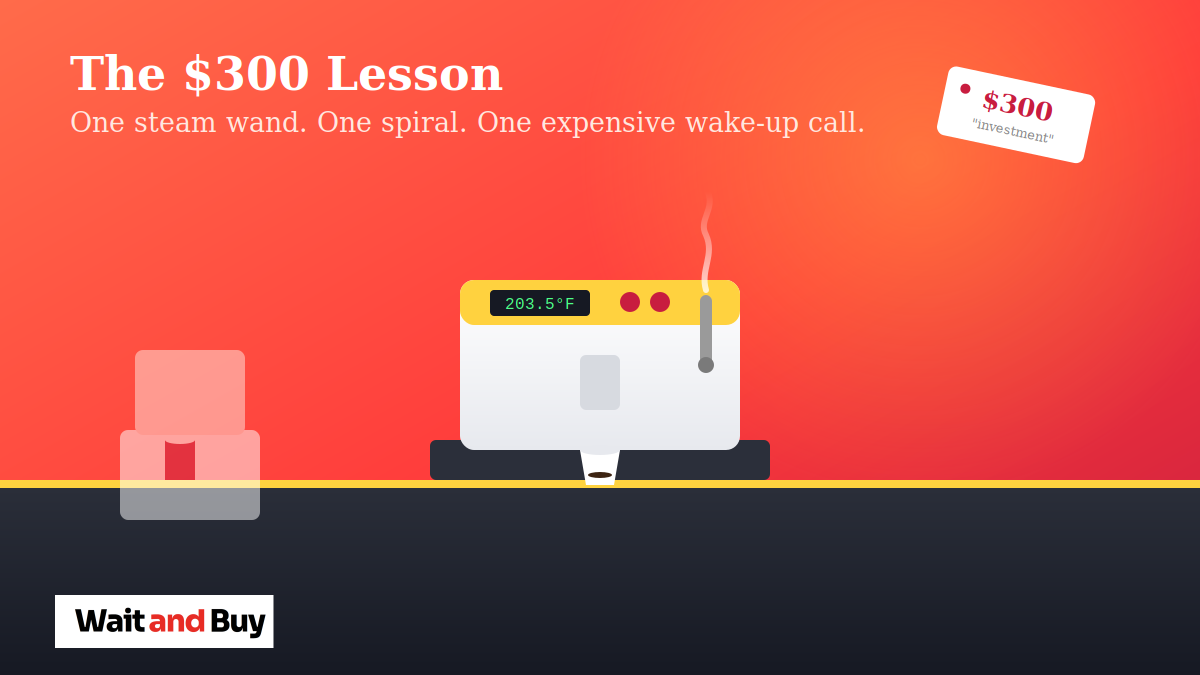
It started with a steam wand.
Not a broken one. Not a missing one. Just the idea of one, a feature my perfectly good coffee maker didn't have. Within days, that small itch turned into an obsession. I told myself my mornings would be better, my coffee would taste different, my life would somehow feel more put-together if I just upgraded.
So I did what any reasonable person does before a big purchase: I researched. Except "researched" meant three nights of YouTube tutorials from Italian baristas, old forum threads nobody had replied to in years, and increasingly creative justifications for why $300 was actually a smart investment rather than an indulgence.
I bought it.
The unboxing felt like an event. The first cup felt like a letdown. The machine was slower to heat up, harder to clean, and the coffee tasted exactly the same as before. That was the part that stung most.
By the time I considered returning it, the return window had already closed. Now I had an expensive appliance I liked less than the one it replaced, sitting on my counter as a permanent reminder of the whole ordeal.
What Was Actually Happening
This wasn't really about coffee. It was a pattern, one most people fall into without noticing:- A small spark of dissatisfaction with something that already works fine
- Days of "research" that quietly turns a want into a manufactured need
- A purchase driven less by the product and more by the fantasy of who you'll be once you own it
- A crash, almost immediately after, once the novelty wears off
Retailers, physical and digital, are built to move you through this cycle as fast as possible, with as little friction as they can get away with.
Why Friction Is the Fix
If impulse is the disease, friction is the cure. The trick isn't willpower. It's building in a pause long enough for the emotional urgency to fade on its own.
That's the whole idea behind WaitAndBuy. Whether you're standing in a showroom or scrolling late at night, you snap a photo instead of buying, and give it real time. 48 hours, a weekend, whatever it takes for the "need" to reveal itself as either genuine or just noise.
Because most of the time, the thing you were chasing wasn't the product at all. It was the chase itself.
Quick Takeaway
How do you stop an impulse buy? Add friction between the urge and the purchase. Take a photo of the item instead of buying it right away, walk away from the store or close the tab, and revisit the decision after 24-48 hours. Most impulses fade once the initial emotional spike passes, leaving only the purchases you actually still want.