30-Day Impulse Shopping Challenge: Free Tracker
"Try this 30-day impulse shopping challenge with a practical tracker to identify triggers, delay purchases, and build lasting spending habits."
The 30-Day Impulse Shopping Challenge: Buy Less With a Practical Tracker
Have you ever bought something because it looked exciting in the moment, only to wonder a few days later why you bought it? Impulse shopping often happens when we are bored, stressed, tempted by a discount, or scrolling through an online store. The excitement of buying can be immediate, while buyer’s remorse arrives later.
The answer is not to stop shopping altogether. It is to create space between wanting something and deciding to buy it. This 30-day impulse shopping challenge will help you recognize shopping triggers, delay purchases, and develop better spending habits without feeling deprived.
What Is the 30-Day Impulse Shopping Challenge?
The 30-day impulse shopping challenge is a structured plan to reduce unplanned purchases by tracking shopping triggers, delaying buying decisions, and reviewing spending habits over one month.
Throughout the challenge, you can still buy essentials, such as groceries, medicines, and necessary household items, as well as planned purchases that fit your budget. The focus is on non-essential purchases you make on impulse rather than things you have deliberately decided you need or want.
The challenge follows four habits: notice, track, delay, and decide. You will build them gradually instead of relying on willpower alone.
Why Do We Buy Things on Impulse, and Why Does Waiting Help?
Impulse buying is not always about wanting more possessions. Sometimes shopping offers a quick distraction from boredom, stress, disappointment, or an uncomfortable mood. At other times, limited-time offers, discounts, social media recommendations, and attractive product displays make buying feel urgent. When a purchase promises an immediate reward, it can be easy to overlook whether the item fits your needs or budget.
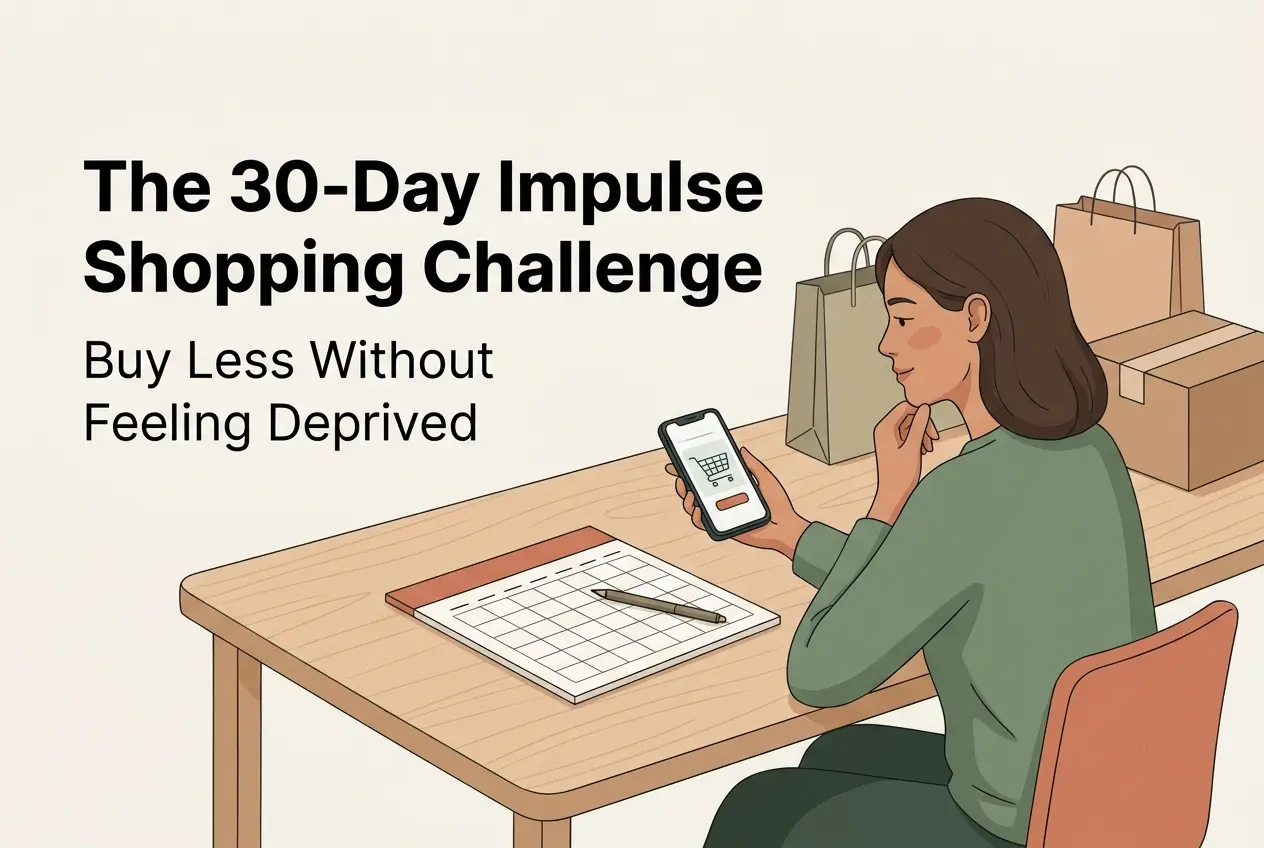
The problem often becomes clearer after the excitement fades. You might discover that you already own something similar, rarely use the item, or bought it because it was on sale rather than because you needed it. This disappointment is commonly described as buyer’s remorse.
Waiting helps by separating the initial urge from the final decision. A pause gives you time to consider the price, your budget, what you already own, and whether you still want the item when the excitement has passed. It does not mean every impulse purchase is a bad decision. It simply gives you a better chance to choose deliberately rather than react automatically.
Week 1: Understand Your Shopping Triggers (Days 1–7)
Your first task is to become aware of when and why you feel like shopping. Record the items you want to buy, their prices, and what prompted the urge. Was it boredom, stress, a sale, social media, or an advertisement? Use the impulse purchase tracker below to capture these details without judging yourself.
By the end of the week, review your entries. You might discover that you browse shopping apps when you are tired, buy unnecessary items during sales, or shop when you need a distraction. Recognizing these patterns gives you a starting point for change.
Your weekly goal: Identify your three most common shopping triggers and begin noticing them as they happen.
Week 2: Pause Before You Purchase (Days 8–14)
This week, practice delaying purchases instead of acting on the first urge. When you find something you want, save it and wait at least 24 hours before deciding. For expensive or non-essential items, consider waiting three or seven days.
During the waiting period, ask yourself whether you still want the item, whether you already own something similar, and whether buying it fits your budget. You can also remove shopping notifications and promotional emails that repeatedly tempt you to spend.
You may have heard of the 30-day rule, a popular personal-finance approach that involves waiting 30 days before buying a non-essential item. This challenge is different: it lasts 30 days, but you do not have to wait a full month for every purchase. Choose a waiting period that suits the item and helps you make a considered decision.
Your weekly goal: Delay purchases and notice how your feelings about an item change over time.
Week 3: Replace Impulse Shopping With Better Habits (Days 15–21)
Resisting the urge to shop can be difficult if shopping has become your response to boredom, stress, or frustration. This week, experiment with alternatives. When you feel like browsing, take a walk, contact a friend, read, or spend time on an activity you enjoy.
Make intentional spending easier by using what you already own, setting a realistic limit for non-essential purchases, and creating a shopping list before visiting a store or website. If a sale tempts you, remember that a discount does not make an item worthwhile if you would not have considered buying it otherwise.
During festive periods and major Indian sale events, decide your budget and shopping list in advance. Compare offers only for items you planned to buy, and give unplanned purchases a waiting period rather than treating a countdown timer as a reason to rush.
Your weekly goal: Find alternatives to shopping and practice skipping purchases that do not align with your priorities.
Week 4: Turn Better Decisions Into Lasting Habits (Days 22–30)
Revisit the items you saved earlier in the challenge. Some may no longer interest you, while others may still feel useful or worthwhile. Review each item against your needs, budget, and reasons for wanting it. Buy it if it makes sense, skip it if it does not, or wait longer if you are unsure.
Use the remaining days to create personal shopping rules you can maintain. You might wait 24 hours before buying non-essential items, avoid browsing shopping apps when bored, or check your budget before purchasing something on sale. On Day 30, review your tracker and identify the habits that made the biggest difference.
Your weekly goal: Create a realistic set of shopping rules to continue after the challenge ends.
Your Impulse Purchase Tracker
A simple tracker helps you recognize patterns and see which purchase urges pass with time. Whenever you feel tempted to buy something, record the item, its price, the trigger, your waiting period, and your final decision.
| Date | Item and price | Trigger | Waiting period | Final decision | Spend avoided |
|---|---|---|---|---|---|
| Day 3 | Shoes, $25 | Sale | 3 days | Skipped | $25 |
| Day 9 | Headphones, $20 | Online browsing | 24 hours | Bought | $0 |
| Day 16 | Bag, $15 | Boredom | 7 days | Still waiting | $0 |
These are illustrative prices, not exact currency conversions.
Spend avoided is the cost of a purchase you decided not to make. It is not automatically money saved in your bank account. It becomes actual savings only if you keep that money unspent or move it into savings instead of using it elsewhere.
At the end of each week, review your tracker. Which triggers appeared most often? Which items lost their appeal after waiting? What helped you make a better decision?
How WaitAndBuy Can Help
You do not have to rely on memory or willpower alone. Try WaitAndBuy, a free tool that lets you record an item's name, price, and notes so you can reconsider it later instead of purchasing immediately.
Save the item, give yourself time to think, and return when you are ready to decide. You can buy it, skip it, or wait longer. This simple process puts the challenge's core habits into practice: pause, think, and buy intentionally.
What If You Make an Impulse Purchase During the Challenge?
One unplanned purchase does not mean you have failed. Consider what happened. Were you stressed, influenced by a sale, or shopping out of habit? Understanding the trigger can help you prepare for a similar situation next time.
Continue tracking your decisions and return to your plan at the next opportunity. The goal is not perfect behavior for 30 days. It is to become more aware of your choices and gradually make fewer purchases you regret.
Frequently Asked Questions
How do I stop impulse buying in 30 days?
Start by tracking your shopping triggers, then introduce a waiting period before non-essential purchases. Over the month, practice alternatives to shopping, review saved items, and create personal rules that help you make more intentional decisions.
What is the 30-day rule for spending?
The 30-day rule is a method of delaying a non-essential purchase for 30 days before deciding whether to buy it. The waiting period helps you reconsider the item after the initial excitement fades. You can use a shorter period for everyday purchases and a longer one for expensive items.
Does the 24-hour rule actually help with impulse buying?
A 24-hour pause can help you move beyond the initial urge and reconsider a purchase more carefully. It is a practical starting point, though it cannot guarantee that every decision will be right. Longer waiting periods may suit more expensive purchases.
Is this challenge the same as a no-spend challenge?
No. A no-spend challenge usually restricts spending in selected categories or for a set period. This challenge focuses on understanding your triggers and reducing unplanned purchases while allowing essential spending and purchases that fit your priorities.
How can I stop online impulse shopping?
Turn off promotional notifications, avoid browsing shopping apps out of habit, and save items instead of buying them immediately. A waiting period helps you decide whether an item is worth buying after the initial excitement has passed.
How do I maintain the habit after 30 days?
Keep using the strategies that worked best, such as waiting before buying, checking your budget, and reviewing your shopping triggers. You do not need to track every urge forever. Focus on the habits that help you make more intentional decisions.
Conclusion: Make the Pause a Habit
Reducing impulse shopping does not mean giving up the pleasure of buying things. It means learning to distinguish between wanting something in the moment and deciding that it is worth purchasing. Over 30 days, small actions such as tracking triggers, delaying decisions, and reviewing skipped purchases can help you develop a more thoughtful approach to spending.
Start with the next item that catches your attention. Instead of buying it immediately, save it, wait, and decide later. With WaitAndBuy, you can put that pause into practice and build a shopping habit that feels more intentional and less driven by impulse.